How to play
The main features of Light Volley, to start playing right away.
As in traditional volleyball, the object of the game is to land the ball in the opponents’ court, with a maximum of three touches per team (a block touch doesn’t count as a touch).
The main features
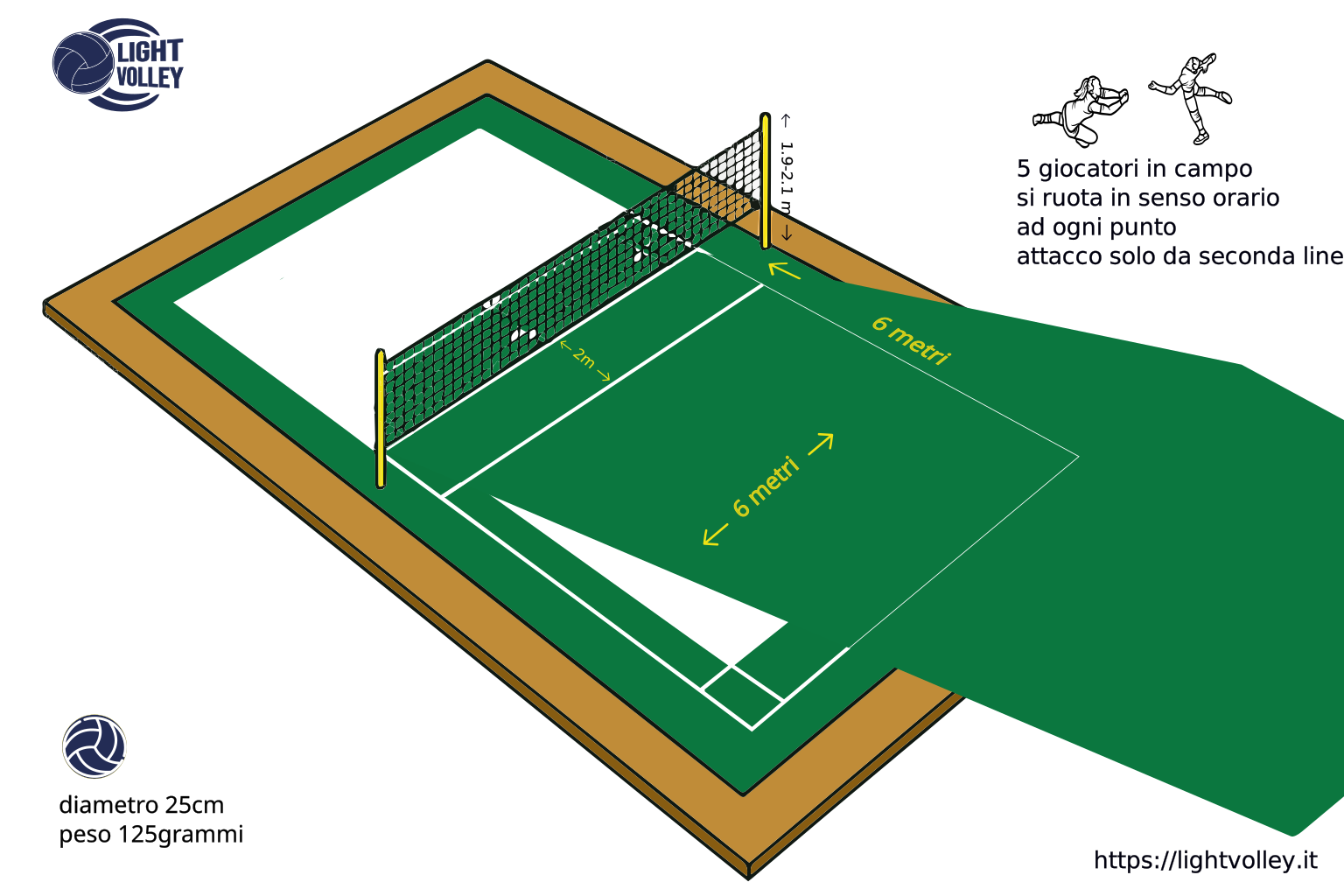
The ball. It has a diameter of 25 cm and weighs 125 grams: bigger and lighter than an official volleyball. The result is a ball that’s easier to intercept, but harder to control precisely - so even people who haven’t learned the basic techniques of volleyball can play right away, with lots of touches and lots of fun. Learn more about the ball.
The court. Smaller than a volleyball court: each team plays in 6 x 6 metres, for a total of 5 players. A line drawn 2 metres from the net divides the court into two zones: the attack zone (back row, farther from the net) and the defence zone (front row, near the net).
The net. Variable height: 1.9 m for women, 2.1 m for men, 2 m in mixed play. A height designed to let anyone, of any height, attack.
The players. Five people play per team. On every point won, the team rotates clockwise: no athlete serves twice in a row.
The attack is played from the back row
Contrary to what you might expect, the zone from which attacking is allowed is the one farthest from the net (the back row). This choice makes the attack less powerful and reduces the risk of injury from contact near the net with opponents.
See the court in detail